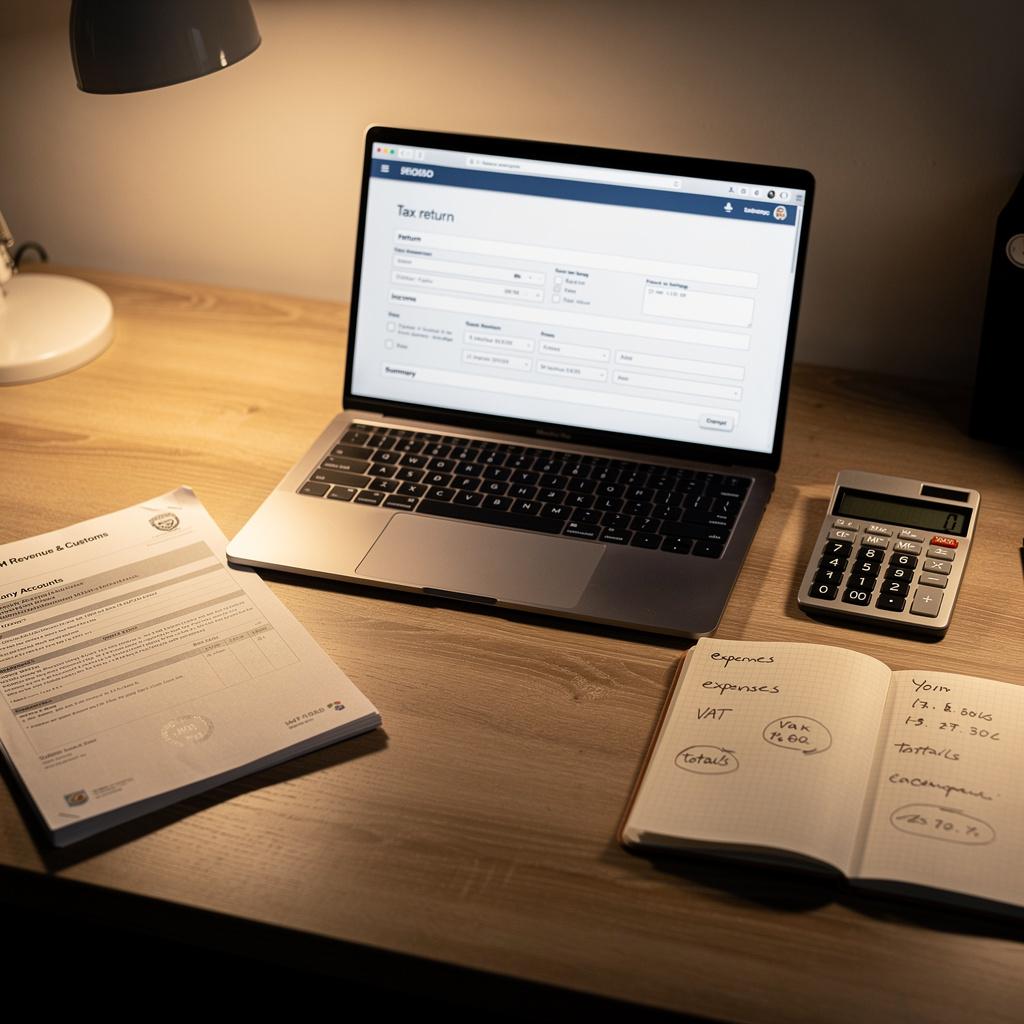



No, there is no legal requirement to hire a UK accountant for a non-resident limited company. As the director, you are personally responsible for filing the annual accounts, the Corporation Tax return (CT600), the confirmation statement and keeping proper records, whether you do that yourself or pay someone to do it. So the real question is not "do I have to" but "can I do this well from abroad, and is my time better spent elsewhere?"
This guide covers what a UK limited company must file each year, what makes self-filing hard from outside the UK, when an accountant earns their fee, and whether that accountant even needs to be in the UK.
What you are legally responsible for
The duty sits with the director, not with any adviser. If you appoint an accountant, you are delegating the work, but the legal responsibility for accurate, on-time filing stays with you.
Four things usually need handling every year for an active company:
- Annual accounts filed to Companies House. Filing online is free (checked 27 November 2026 on GOV.UK).
- Corporation Tax return (CT600) filed to HMRC, with tax paid on any profit. We cover this in detail in how to pay Corporation Tax as a non-resident director.
- Confirmation statement to Companies House at least once every 12 months (checked 27 November 2026 on GOV.UK). See our guide to filing your confirmation statement.
- VAT returns, but only if your company is VAT registered. Start with our UK VAT registration guide.
We won't rebuild those guides here. The point is that these are separate filings, to two different bodies, on different clocks.

Photo by James Genchi on Unsplash
Can you file it all yourself from abroad?
Yes, in principle. Plenty of founders self-file, especially in the first dormant or low-activity year. But there are real friction points once a company starts trading.
What makes self-filing harder
- UK accounts formats. Accounts usually have to follow UK standards such as FRS 102 or the micro-entity rules. The format is not obvious if you've never prepared UK statutory accounts.
- CT600 and iXBRL tagging. The Corporation Tax return needs your accounts tagged in iXBRL. The tagging is mandatory and fiddly to get right by hand.
- Making Tax Digital for VAT. If you're VAT registered, returns usually have to go through MTD-compatible software, not a web form.
- Multi-currency books. If you take payouts in several currencies, reconciling them to a single reporting currency is where most DIY bookkeeping falls apart.
- Deadlines across time zones. Missing a Companies House or HMRC deadline because of a date confusion is an avoidable but common cause of penalties.
None of this is impossible. It is just time you may not want to spend, and the cost of a mistake (penalties, rejected filings, a reopened enquiry) can be higher than the fee you were avoiding.
When an accountant is worth it
The honest answer depends on how active your company is.
An accountant usually pays for itself when your company is:
- Trading, with real income and expenses to record.
- VAT registered, so quarterly MTD returns are due.
- Taking marketplace or payment provider payouts (such as PayPal), where fees, refunds and chargebacks complicate the bookkeeping.
- Dealing in several currencies, where reconciliation is a monthly job rather than an afterthought.
If any two of those apply to you, doing it all yourself from abroad tends to cost more in hours and risk than it saves.
What about a dormant company?
A dormant company (one that isn't trading) is much simpler. You still have to file dormant accounts and the confirmation statement, and there's usually no Corporation Tax to pay because there's no profit. Many founders handle a dormant company themselves. The admin is light, but it is not zero, and the deadlines still apply.
Setting up your UK company from abroad?
Join 10,000+ founders from 100+ countries who set up their UK company with us. See what each plan includes.
Does the accountant have to be in the UK?
No. UK filing knowledge matters far more than the accountant's location. What counts is that they understand UK statutory accounts, the CT600 and VAT rules, not which country they sit in.
HMRC uses agent authorisation to let an adviser file on your behalf. An accountant can file for you once you authorise them as your agent with HMRC. They usually need an HMRC agent services account, and there is a separate way to apply for one if they're not based in the UK (checked 27 November 2026 on GOV.UK). So you can keep your own accountant wherever you are, provided they genuinely know UK compliance.
In practice, the best fit is usually a provider who works with non-resident founders every day, because they already know the payment payouts, multi-currency books and remote director questions you'll have.

Photo by LinkedIn Sales Solutions on Unsplash
What a good accounting service should cover
If you do decide to delegate, here is what a complete service usually includes:
- Monthly accounting and bookkeeping with a dedicated accountant
- Bookkeeping and bank reconciliation
- Quarterly VAT returns (if you're VAT registered)
- Year-end accounts
- Corporation Tax return (CT600)
- Your confirmation statement
- Making Tax Digital compliance
- Xero, with your bank transactions imported
- Accounting and tax advice
- Reminders before every deadline
That covers the full filing cycle plus the ongoing bookkeeping that makes the year-end painless rather than a scramble.
What drives the price
There's no single number because the work varies. Price usually depends on:
- Your revenue
- Your sales channels
- How many bank accounts you have
- Monthly transaction volume
- How many currencies you handle
- Whether you're VAT registered
A dormant company with no transactions is a small job. A VAT-registered store taking payouts in several currencies is a bigger one.
What is not included
Be clear about the edges. A company accounting service like this does not usually include:
- Your personal tax return in your home country or in the UK
- Audits
- Legal advice
Those are separate services, and anyone promising all of it in one line is worth a second look.
Quick comparison: do it yourself vs appoint an accountant
| Situation | DIY is usually fine | Accountant usually worth it |
|---|---|---|
| Dormant company | Yes | Optional |
| Low-activity, no VAT | Possible | Depends on confidence |
| Trading, VAT registered | Hard | Yes |
| Payment provider payouts | Hard | Yes |
| Multiple currencies | Hard | Yes |
The pattern is simple. The more your company actually does, the more the compliance load tilts towards hiring help.

Photo by Eric Rothermel on Unsplash
The bottom line
You don't need an accountant to run a UK limited company from abroad, and nothing about UK company formation forces you to appoint one. But as soon as you're trading, registered for VAT, or juggling payouts and currencies, the DIY route gets expensive in time and risk. For a dormant company, self-filing is realistic. For an active one, a provider who knows non-resident compliance usually saves more than it costs.
Frequently asked questions
Do I need an accountant for a dormant UK company?
No. A dormant company still has to file dormant accounts and a confirmation statement, and there's usually no Corporation Tax to pay because there's no profit. The admin is light, so many founders handle a dormant company themselves, though you can delegate it if you prefer.
Can I file my own company accounts from abroad?
Yes. There is no legal requirement to use an accountant, so you can self-file. The challenges are UK accounts formats (such as FRS 102 or micro-entity), the mandatory iXBRL tagging on the CT600, Making Tax Digital for VAT and reconciling multi-currency transactions. It's doable, but mistakes can lead to penalties.
Does HMRC require me to use an agent?
No. HMRC does not require you to appoint an agent. If you choose to, HMRC agent authorisation lets a registered accountant file on your behalf, and they don't have to be based in the UK. The legal responsibility for accurate, on-time filing still stays with you as the director.
What is not included in a company accounting service?
A typical company accounting service does not include your personal tax return, audits or legal advice. It covers the company's bookkeeping and filings (accounts, CT600, confirmation statement, VAT if registered), not your individual tax position or legal matters.